
Here’s my honest verdict on “chaos gardening.
If you’ve been anywhere near gardening TikTok this year, you’ll have run into chaos gardening, the trend where you take a packet (or several packets, or possibly your entire seed drawer) of mixed seeds, fling them across a patch of bare soil with roughly the enthusiasm of someone throwing confetti at a wedding, and then simply… wait. No rows, no spacing, no plan. Nature, apparently, will sort out the details.
It’s currently sitting at somewhere north of 9.7 billion views on TikTok, which puts it comfortably ahead of most actual news events this year. It’s also, by a wide margin, the biggest gardening trend on the internet right now,bigger than raised beds, bigger than houseplants, bigger than whatever’s happening with people painting their fences black.
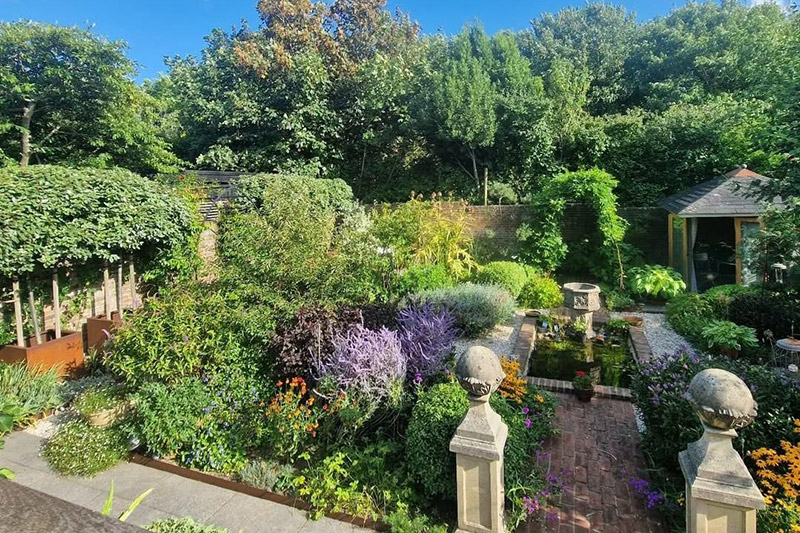
As someone who’s spent 20 years designing gardens for a living, naturalistic ones, specifically, the kind that are supposed to look like they weren’t designed at all, I have opinions about this. Genuinely mixed ones. So here’s the honest verdict: what chaos gardening gets right, what it quietly gets wrong, and why the “wild” look you’re chasing is actually one of the most deliberate things a garden can be.
What chaos gardening actually gets right
Let’s give credit where it’s due, because there’s real substance underneath the trend, not just an excuse for laziness with good lighting.
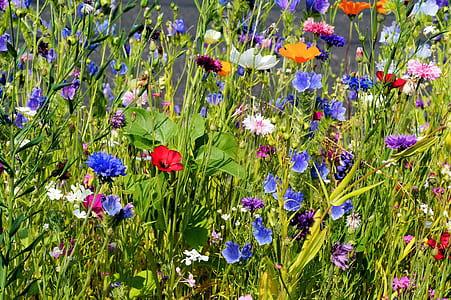
It’s genuinely good for biodiversity. A random mix of seed does produce more variety than the average new gardener would plan for themselves, and variety is exactly what pollinators want. Bees and hoverflies don’t care whether your cosmos is in a neat drift or scattered like it lost an argument with a leaf blower, they just want flowers, in numbers, across as long a season as possible.
It removes the fear of getting it wrong. This might be the trend’s single best contribution to gardening as a hobby. So many new gardeners are paralysed by the idea that there’s a “correct” way to plant something, and one wrong move ruins everything. Chaos gardening’s entire premise is that there is no wrong move, which is enormously freeing, and genuinely gets more people outside with a trowel who’d otherwise never start.
It’s an honest reaction to something real. People are tired of gardens that feel like showrooms,every plant chosen for a colour-coordinated scheme, not a leaf out of place, absolutely no room for anything to self-seed or surprise you. Chaos gardening is a rebellion against that, and as rebellions go, it’s a fairly harmless one.
I’ll say this plainly: if the choice is between chaos gardening and not gardening at all, chaos gardening wins every time, no contest.
Where it quietly falls apart
Here’s the bit the TikTok clips don’t show you, mostly because the clips are filmed in July, when everything is at its absolute peak and looking gorgeous by pure coincidence of timing.
The empty patch problem. Scattered annual mixes tend to be dominated by whichever three or four species germinate fastest and grow most aggressively, usually cosmos, calendula, and something in the poppy family, because they’re cheap, reliable, and included in every “wildflower mix” going. By August, those fast growers have finished flowering and start to look tired, and because nothing was planned to follow them, you’re left with gaps. Bare soil in a garden that was supposed to be definitely un-bare. It’s a bit like throwing a party and forgetting the bubbly.
The bully problem. Some of what’s in a mixed packet is considerably more assertive than the rest. Nigella and certain poppies will self-seed with genuine enthusiasm and can quietly smother slower, more delicate things the following year, so a “diverse” chaos bed can actually become less diverse over time, not more, you just end up with whichever plant was the most competitive, dominating everything else out.
The November problem. This is the one nobody films. A chaos-gardened bed made entirely of annuals has a hard stop the moment the first proper frost hits, there’s no structure underneath, nothing woody, nothing evergreen, nothing holding the shape of the border through winter. What was joyfully wild in July is just… bare earth and some collapsed stems by December. A professionally designed naturalistic border, by contrast, is built with a skeleton of grasses and perennials that hold their structure through winter, so there’s still something to look at even when nothing’s in flower.
The “which weed is this” problem. When you scatter a mix and let everything grow, you genuinely can’t always tell what’s a seedling from your packet and what’s a weed muscling in on the party, until it’s a foot tall and has opinions. A more considered approach means you know, plant by plant, what belongs, which makes the actual maintenance far less guesswork.
What a designer does differently to get the same look, deliberately
Here’s the part that actually matters: the “wild, effortless” aesthetic people are chasing with chaos gardening is entirely achievable, it’s just achieved by planning for it, rather than skipping planning altogether. This is more or less the entire discipline of naturalistic planting design, and it’s worth breaking down what’s actually happening underneath a border that looks this relaxed.
Structure first, chaos second. A naturalistic border starts with a framework, grasses, and a handful of perennials chosen for their shape and how long they hold it, placed with real intention even though the finished effect looks unplanned. Everything else, the “chaos”, happens on top of that skeleton, which is why the bed still has a shape in January when the flowers are long gone.
Repetition, not randomness. This is the trick that makes professionally designed naturalistic planting read as wild while actually looking coherent rather than messy: the same handful of plants repeated in drifts through a border, rather than one of everything scattered at random. Your eye reads repetition as intentional, even when the placement within each drift looks loose and informal.
Succession, not a single moment. A designed border is planned so that as one thing finishes, something else is already coming through to take over, meaning there’s no bare-patch problem in August, because August was accounted for back at the planning stage, not left to chance.
Editing, not abandoning. The most counter-intuitive thing about naturalistic design is that it actually requires more intervention than people assume, not less, thinning self-seeders that are getting too greedy, cutting back what’s finished, making sure nothing’s quietly taking over. “Chaos,” properly done, is closer to a jazz musician improvising within a chord structure than someone banging randomly on a piano. It looks free because the structure underneath is doing its job invisibly.
Structured chaos, for all year round colour
So my verdict?
Chaos gardening is a genuinely good entry point and a genuinely incomplete long-term plan. It’s brilliant at getting people to start, and it stops being brilliant somewhere around the point where a first time gardener is staring at a patch of bare soil in September wondering what went wrong, when nothing actually went wrong, the bed just wasn’t built to last past its first flush.
The good news is that the fix isn’t “abandon the wild look and go back to neat rows.” It’s the opposite: keep the wild look, and put a bit of design thinking underneath it so it survives past July. That’s the whole job, really, making a garden that looks like it happened by accident, when every part of it was actually chosen on purpose.
If you’ve had a go at chaos gardening this year and you’re currently looking at a border that peaked beautifully in summer and has now gone a bit quiet, that’s not a failure,it’s just the point where a bit of design thinking earns its keep. That’s the exact gap that I work in, gardens with all the looseness and life of chaos gardening, but with a structure underneath built to still look like something in November.
