
By Owen Brooks, planting and garden designer at Purely Planting, Brighton, Hove and Sussex
There is something rather lovely about hydrangeas. They bring generosity, softness and a real sense of abundance to a garden, often flowering just when the summer borders are beginning to hit their stride. Whether you love the big, rounded flowerheads of a traditional mophead, the elegant cones of a paniculata, or the beautiful foliage of an oakleaf hydrangea, there is a variety to suit almost every garden.
I often find that people assume hydrangeas are difficult to grow, or that they need a particular type of soil to thrive. The truth is a little simpler. Choose the right variety for your conditions, prepare the soil well and keep an eye on watering, and they can be wonderfully rewarding plants.
Working across Brighton, Hove and Sussex, I come across all sorts of garden conditions, from heavy clay to free draining soil and the chalky ground we often find in this part of the world. The key is not to fight your garden, but to work with it.
Here are five hydrangeas I would happily recommend, along with a few tips on where to plant them, how to look after them and what to grow underneath.
1. Hydrangea macrophylla, the classic mophead and lacecap
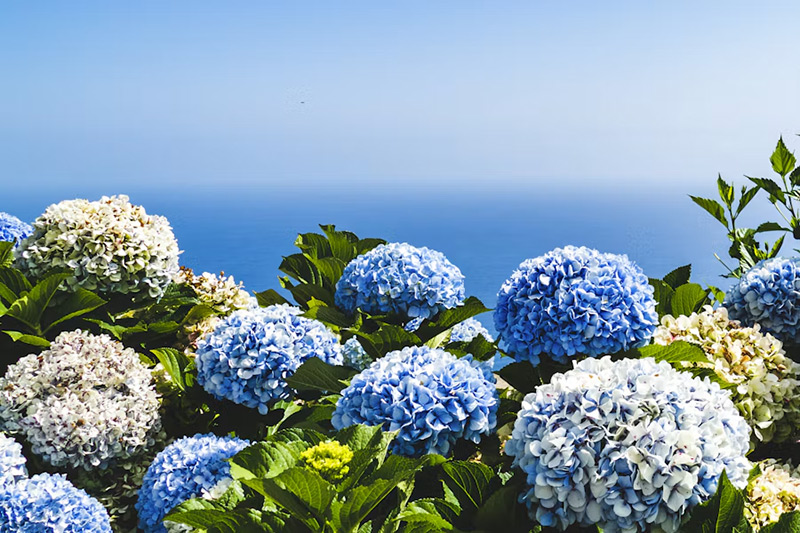
Best for: partial shade, sheltered borders and cottage garden planting ( See above )
If you picture a traditional hydrangea, chances are you are thinking of Hydrangea macrophylla. These are the familiar mopheads, with their generous rounded flowerheads, and lacecaps, which have flatter flowers with delicate little centres surrounded by larger petals.
They are particularly useful in a border that receives morning sunshine and some shade in the afternoon. A little shelter from strong winds is helpful, especially in gardens exposed to the coast.
Flower colour can be fascinating with these hydrangeas. Some pink and blue varieties change colour depending on soil acidity and the availability of aluminium. Acidic soil can encourage blue flowers, while more alkaline soil generally produces pink flowers. Not every variety changes colour, though, and white forms usually remain white.
In parts of Sussex where the soil is chalky or alkaline, it can be difficult to maintain a strong blue colour in the ground. If blue is important to you, growing a suitable variety in a container with ericaceous compost can be a better option.
My planting tip: Combine mophead hydrangeas with ferns, hardy geraniums and shade tolerant grasses for a relaxed, layered border. The contrast between their large leaves and the finer foliage of their neighbours makes the planting feel much more natural.
2. Hydrangea serrata, the delicate choice for dappled shade
Best for: woodland style gardens, smaller borders and sheltered positions
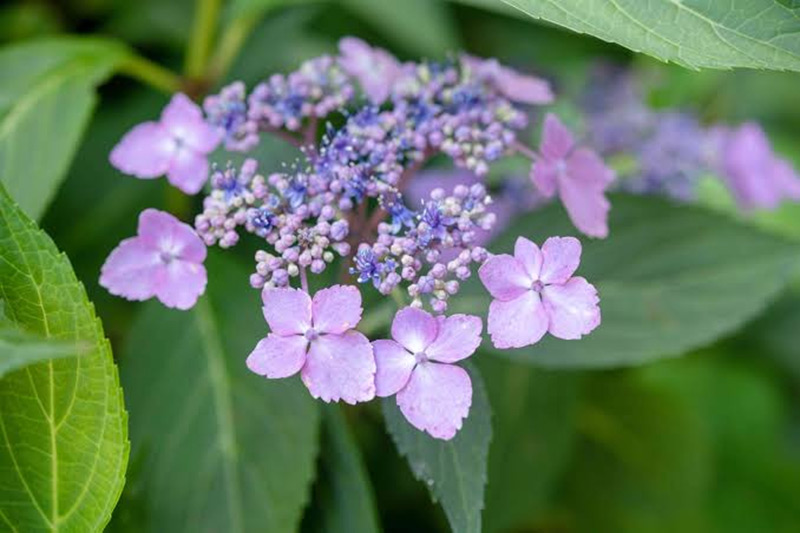
Hydrangea serrata is a favourite when I want something a little more understated. Often described as the mountain hydrangea, it tends to have a more delicate appearance than many traditional mopheads, with attractive foliage and lovely lacecap flowers.
It works beautifully in partial shade, particularly where it receives a little gentle morning sun. It is a good choice for smaller gardens or for planting beneath the light canopy of deciduous trees, provided the soil does not become too dry.
The flowers can take on beautiful blue, lilac and pink tones depending on the variety and soil conditions. I particularly like the way these plants sit comfortably alongside other woodland inspired planting, without demanding all the attention.
My planting tip: Try Hydrangea serrata with Japanese anemones, epimediums, hostas and evergreen ferns. The combination of different leaf shapes creates interest well before the flowers appear and continues to look good as the season progresses.
3. Hydrangea arborescens ‘Annabelle’, the generous summer flowerer
Best for: partial shade or sunny borders with reliably moist soil
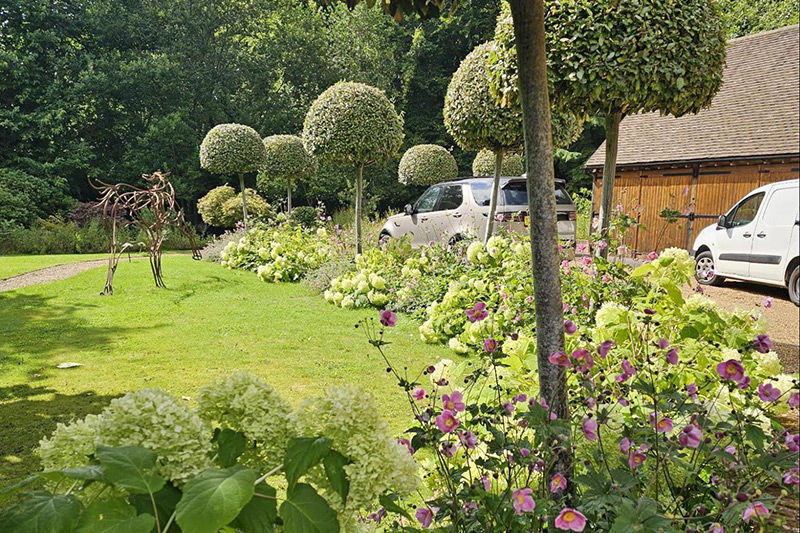
If you want a hydrangea that makes a real statement, ‘Annabelle’ is difficult to overlook. It produces enormous rounded heads of white flowers that open in summer, often developing a soft green tint as they age.
It is a particularly useful shrub for bringing brightness into a border, and it is generally forgiving of different soil types. It can grow in clay, loam or sandy soil, as long as there is sufficient moisture and the ground drains reasonably well.
Although ‘Annabelle’ tolerates full sun, I would usually favour partial shade in a hot or exposed garden. The large flowerheads can become heavy, particularly after rain, so giving the plant room to develop and allowing for its eventual size is worthwhile.
Unlike the traditional mophead hydrangeas, ‘Annabelle’ flowers on new growth. This means it can be pruned in early spring, usually cutting back the previous season’s growth to a low framework, or leaving a little more height if you prefer a larger shrub.
My planting tip: Plant ‘Annabelle’ with woodland perennials, hardy geraniums or a loose drift of ornamental grasses. The white flowerheads look particularly beautiful against darker green foliage, and they provide a lovely contrast with more delicate flowers.
4. Hydrangea paniculata ‘Limelight’, for sunshine and structure
Best for: sunny borders, open gardens and late summer interest
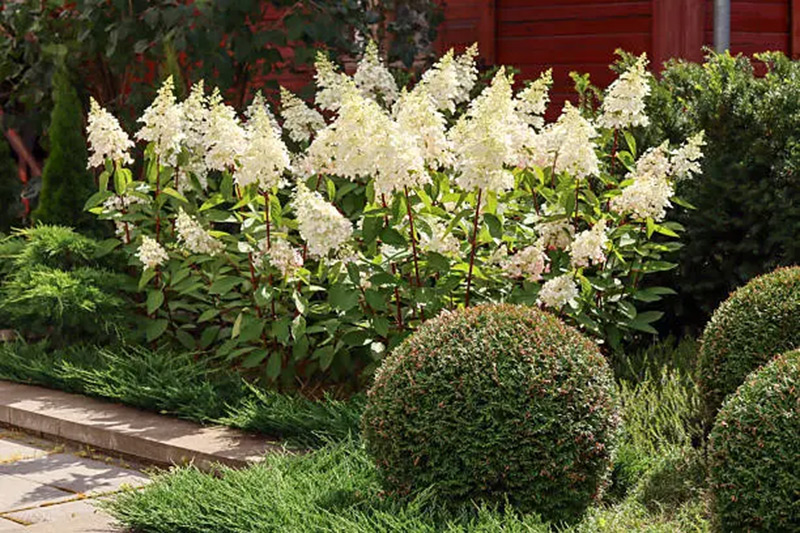
Hydrangea paniculata is one of the most versatile groups of hydrangeas for the garden. Unlike the rounded flowerheads of ‘Annabelle’, paniculatas produce elegant, cone shaped blooms that can change colour as they mature.
‘Limelight’ is a particularly popular choice. Its flowers open in soft lime green tones, become creamy as summer progresses and can develop pinkish shades later in the season.
These hydrangeas are generally better suited to sunnier positions than many macrophylla varieties, provided the soil retains enough moisture. They are also useful where you want a shrub with a little more presence, either as part of a mixed border or as a repeated feature along a garden boundary.
Another advantage is that paniculatas flower on the current season’s growth. An annual prune in early spring encourages strong new shoots and a good display of flowers. The amount you prune will influence the size and structure of the shrub, so there is no need to cut every plant back hard if you prefer a more natural shape.
My planting tip: I like paniculatas with ornamental grasses, salvias and late flowering perennials. The upright flower cones sit beautifully among airy planting, and the whole combination can look particularly good as the light softens towards the end of summer.
If you have a smaller garden, consider a more compact paniculata such as ‘Little Lime’. Always check the eventual height and spread before planting, as varieties can differ considerably.
5. Hydrangea quercifolia, the oakleaf hydrangea
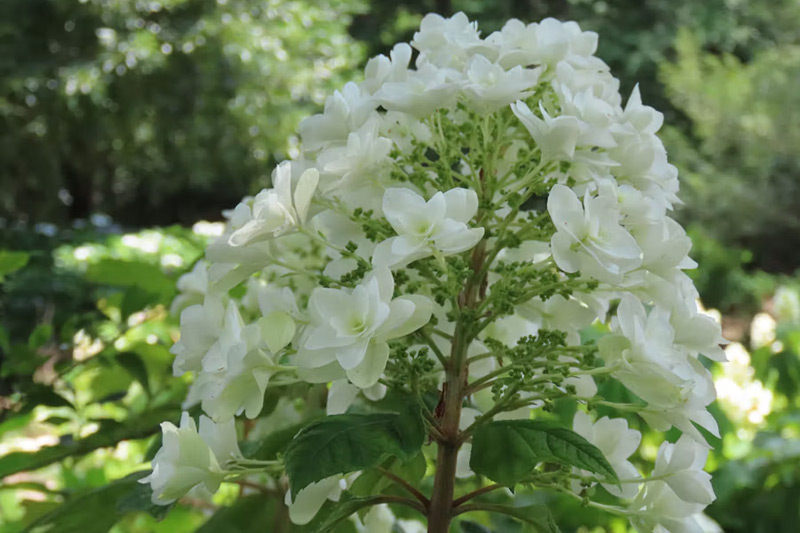
Best for: partial shade, sheltered borders and gardens with plenty of autumn interest
Hydrangea quercifolia is a little different from the others on this list. Its large leaves are shaped rather like oak leaves, giving it a strong foliage presence even when it is not flowering.
In summer, it produces long, cone shaped flowerheads that start off creamy white and gradually develop softer pink and brown tones. As autumn approaches, the foliage can turn rich shades of red, bronze and burgundy.
This is a wonderful choice for a garden where you want more than just a summer flower display. It brings structure and seasonal interest, and it looks especially good in a naturalistic or woodland inspired planting scheme.
Give it partial shade, a sheltered position and soil that retains moisture without becoming waterlogged. It can tolerate some sun, particularly where the roots stay cool and moist, but protection from harsh afternoon sun can help the foliage look its best.
My planting tip: Underplant with ferns, epimediums, hardy geraniums and spring flowering bulbs. These plants complement the foliage without competing with the shrub for attention. Leave the faded flowerheads in place if you enjoy their winter structure.
What soil do hydrangeas need?
The good news is that most hydrangeas are adaptable. They will grow in clay, loam and sandy soils, but the condition of the soil matters more than many people realise.
The ideal soil is rich in organic matter, moisture retentive and well drained. Hydrangeas appreciate consistent moisture, particularly while establishing and during dry summer weather, but they do not enjoy sitting in waterlogged ground.
Before planting, I would recommend the following.
Improve the soil with organic matter. Work in garden compost or well rotted organic soil conditioner to improve structure and help retain moisture. This is especially useful in sandy soil, which can dry out quickly.
Pay attention to drainage. Heavy clay can be excellent at retaining moisture, but if it becomes waterlogged, improve the planting area and avoid places where water sits for long periods.
Mulch each spring. Apply a generous layer of compost around the plant, keeping it clear of the main stems. This helps conserve moisture, suppress weeds and gradually improve the soil.
Understand your soil pH. Soil acidity matters particularly for blue and pink forms of Hydrangea macrophylla and some Hydrangea serrata. Other types, including ‘Annabelle’ and paniculatas, are much less dependent on soil pH for their flower colour.
In Brighton and across Sussex, chalky or alkaline soil can present a challenge if you want blue mophead hydrangeas. Rather than trying to change the chemistry of an entire border, I would often choose varieties suited to the conditions or grow blue flowering forms in containers.
One final point on watering. A hydrangea that wilts on a hot afternoon is not necessarily dying, but repeated drying out will affect its growth and flowering. Water deeply when needed, particularly during the first growing season, rather than giving it a little water every day.
What should you plant underneath hydrangeas?
This is where hydrangeas really come into their own. Their broad leaves and generous flowers provide a wonderful framework, but the right underplanting is what makes a border feel complete.
I generally look for plants that complement the hydrangea rather than compete with it. Foliage, texture and flowering season are just as important as flower colour.
For shady borders
Ferns are excellent companions. Their delicate fronds contrast beautifully with large hydrangea leaves, and they help create a relaxed, woodland atmosphere.
Hostas bring bold foliage and work well in moist, sheltered positions. Choose varieties with different leaf sizes to introduce texture.
Epimediums are useful for filling the ground beneath shrubs, particularly in dappled shade. Their delicate flowers and attractive foliage provide interest in spring.
Hardy geraniums are among my most useful planting companions. They soften the edges of a border, flower for a long period and can help cover bare soil.
For sunnier borders
Geranium ‘Rozanne’ is a lovely choice for weaving through the front of a border, providing violet blue flowers over a long season.
Salvias bring vertical flower spikes and work particularly well with paniculatas. Choose varieties that suit your soil and light conditions.
Stipa tenuissima and other suitable ornamental grasses add movement and a softer texture around the stronger flowerheads of hydrangeas.
Alchemilla mollis is useful for its fresh green foliage and frothy flowers, particularly in a relaxed, informal planting scheme.
A few practical tips for underplanting
Give the hydrangea room to grow before filling every gap. Young shrubs can look a little sparse, but they will expand, and crowded roots can make watering more difficult.
Plant smaller perennials around the outer edge of the shrub rather than immediately against the main stems. This gives you room to mulch and water properly.
Most importantly, match your companions to the same conditions. A shade loving fern will struggle in a hot, dry border, while a sun loving salvia will not thank you for being tucked into deep shade.
I also like to think about the whole year. Spring bulbs, summer flowers, attractive foliage and a few plants that hold their shape into winter can turn a hydrangea border into something that feels considered throughout the seasons.
A little advice on pruning
Hydrangeas are often pruned incorrectly because different types flower on different growth.
For Hydrangea macrophylla and Hydrangea serrata, avoid cutting back the entire shrub hard in autumn or winter. Many varieties flower on older stems, so a heavy prune can remove the buds that would have produced the next display. In spring, remove dead or damaged growth and tidy faded flowerheads once the risk of severe frost has passed.
For ‘Annabelle’ and Hydrangea paniculata varieties such as ‘Limelight’, prune in early spring. These flower on new growth, and pruning can help encourage strong stems and a good display.
Oakleaf hydrangeas generally need very little pruning. Remove dead or damaged branches and only reduce the size when necessary, as hard pruning can remove future flowers.
If you are unsure which hydrangea you have, it is always worth identifying it before reaching for the secateurs.
My final thoughts
Hydrangeas are generous, adaptable shrubs, but the best results come from choosing the right plant for the right place. A mophead in a sheltered, lightly shaded border, an ‘Annabelle’ in rich, moisture retentive soil, or a paniculata in a sunny mixed border can each bring something quite different to a garden.
I always encourage people to look at their soil, light and available space before choosing plants. It is a simple approach, but it saves a great deal of frustration and gives the garden the best chance of flourishing naturally.
At Purely Planting, I believe that thoughtful planting is about creating a garden that feels right for the space and for the people who use it. If you are planning a new border or rethinking an existing garden, you can find out more about my planting design services or read more about my background and approach on my Owen Brooks profile.
I work across Brighton, Hove and Sussex, helping gardens develop into places that feel natural, welcoming and full of life.
Sometimes, the simplest advice is still the best, choose plants that suit your conditions, give them good soil and allow them time to grow.
Happy planting,
Owen Brooks
Planting Designer, Purely Planting
Brighton, Hove and Sussex
